Trump Announces Deal With Pfizer to Lower Drug Prices

President Trump on Tuesday announced that Pfizer had agreed to sell its products in the U.S. at “Most Favored Nation” pricing, one day after the administration required companies to respond to his prescription drug pricing executive order.

Drugmakers were given until Sept. 29 to respond to Trump’s “Most Favored Nation” Executive Order that required companies sell drugs in the U.S. at the lowest price they sell in other developed countries, establish direct-to-consumer avenues and not sell new drugs for lower prices in other countries.

“Pfizer is committing to offer all of their prescription medications to Medicaid. it will be at the most favored nation’s prices. It’s going to have a huge impact on bringing Medicaid costs down like nothing else,” Trump said in a press briefing in the Oval Office. Continue reading

Study Links ADHD Medications to Small but Significant Risk of Psychosis and Bipolar Disorder

While the risk is small, spotting symptoms early can make a big difference in outcomes.

Just take a little pill…

A recent study of nearly 400,000 patients found that people with attention-deficit/hyperactivity disorder (ADHD) who take stimulants face a small but notable risk of developing psychosis or bipolar disorder. About 3 percent of patients developed one of these conditions after starting medication. Continue reading

CT Scans Save Lives. A New Study Warns They May Also Fuel Childhood Cancers

Experts urge perspective, saying the risk per child remains low.

The theoretical risks of CT scans must be weighed against the benefits. (Bethesda naval medical center, Maryland, Hospital)

After a hard fall, a computed tomography (CT) scan can seem like a lifeline. In minutes, the scan can rule out a brain bleed or another hidden injury. The technology now anchors pediatric care, guiding decisions on concussions, appendicitis, and cancer.

A new study found that CT scans may carry hidden costs. About one in 10 blood cancers among the children and adolescents studied – roughly 3,000 cases – may be attributable to imaging radiation, according to one of the largest studies to date linking medical radiation to childhood leukemia and lymphoma.

The risk to any one child is small, but across millions of patients it adds up. Continue reading

Key Driver of Pancreatic Cancer Spread Identified

Key driver of pancreatic cancer spread identified

A Cornell-led study has revealed how a deadly form of pancreatic cancer enters the bloodstream, solving a long-standing mystery of how the disease spreads and identifying a promising target for therapy.

Pancreatic ductal adenocarcinoma is among the most lethal cancers, with fewer than 10% of patients surviving five years after diagnosis. Its microenvironment is a dense, fibrotic tissue that acts like armor around the tumor. This barrier makes drug delivery difficult and should, in theory, prevent the tumor from spreading. Yet the cancer metastasizes with striking efficiency – a paradox that has puzzled scientists. Continue reading

Johnson: Can’t Sit Still? ~ Pop a Pill!

Our society today is geared towards the quick fix. With the barrage of drug commercials there is a pill for every symptom. If you can’t sit still pop a pill. Big Pharma’s partnership with government agencies including public education is responsible for the drastic increase of children being put on dangerous drugs.

It’s been 25 years since my last opinion piece covering ADHD, ADD and prescription medications like Ritalin and Adderall. I thought I would never write another piece on this specific issue, but things have evolved since 1999. When I learned Illinois Governor Pritzker signed into law a new bill making it mandatory for yearly psychological exams on schoolchildren starting in 3rd grade, I had to write again on this issue. Continue reading

Mysterious Cancer-Causing Fog Sprayed Over US Neighborhoods Linked to Secret Army Project

The US Army has admitted to spraying a mysterious chemical fog over dozens of US neighborhoods, which residents now claim is giving them cancer decades later.

St Louis’s Pruitt-Igoe housing complex in the 1950s, where the US Army tested mysterious chemical fog during Cold War experiments

These secret tests took place in the 1950s and 1960s, in areas such as St Louis, Missouri; Fort Wayne, Indiana; Corpus Christi, Texas, and 29 other cities throughout the US and Canada.

Over the years, residents in these of densely populated areas, including St Louis’s Pruitt-Igoe housing complex, saw trucks and rooftop devices spraying a thick, foul-smelling fog that stuck to their skin and made many children feel sick.

What the military didn’t tell Americans was that the spray contained zinc cadmium sulfide (ZnCdS), a powder which can cause cancer, kidney damage, or lung problems if inhaled in large amounts over time. Continue reading

Cancer Screenings Medicare Gives Seniors For Free

Medicare is a vital government-run health insurance program. It’s designed to serve those 65 and over, but also extends to numerous others in need. Medicare is divided into parts; certain components cover prescription medication needs while others offer general wellness coverage. Medicare Part A is used for hospital treatment, while Part B is the standard medical insurance that most people will be familiar with. There are several free Medicare benefits you can take advantage of throughout the year, but keep in mind that some states plan to implement changes in 2026, including AI-based approval for certain services. Continue reading

This Rare Fungus Can Kill Cancer Cells, And We Finally Know Its Secret

The rare Antrodia cinnamomea fungus is only found in Taiwan. (By Thomaswz19 – Own work, CC BY-SA 3.0)

The rare Antrodia cinnamomea fungus (also known as Taiwanofungus camphoratus) is only found in Taiwan, and is associated with one particular type of endangered tree. Long used for herbal medicines, the fungus has now been linked to cancer-fighting capabilities through a specific kind of sugar molecule. Continue reading

CT Scans Projected to Result in 100,000 New Cancers Across The US

More Americans are receiving computed tomography (CT) scans than ever before, and while this technology can save lives, some scientists are concerned that low doses of ionizing radiation could increase cancer risk.

Importantly, at an individual level, the theoretical risk of developing cancer from a CT scan is thought to be very low, if it exists at all. Patients should not hesitate to undergo these tests if they are considered medically necessary. Continue reading

Alarming Signs of Condition Affecting 6 Million Americans Could Appear at Night

Certain sleeping habits could indicate cognitive decline before other warning signs

Some lesser-known early warning signs of a devastating condition that affects more than six million Americans could appear at night. Sleep-related symptoms could signal dementia before other indicators become apparent.

Dementia is a syndrome, or a collection of symptoms, associated with progressive brain deterioration. Predominantly affecting people aged 65 and above, manifestations such as memory difficulties are frequently confused with typical ageing processes. Continue reading

Map Reveals More Than 1,300 Toxic Sites Across US Where Cancer-Causing Chemicals Seep Into the Ground

Thousands of Americans are living in the direct path of invisible toxic gas clouds from ‘super-emitter’ methane leaks across the country.

PSE Healthy Energy did not name specific plants or leak sites, just counties in which the sites are located. A Western Midstream natural gas facility located in Kern County, California is pictured. A July 2020 methane leak in this county exceeded 1,000 kg of methane per hour

Researchers at the California-based non-profit science institute PSE Healthy Energy created a first-of-its-kind interactive map using data from more than 1,300 major methane leaks across the country to model the spread of dangerous air pollutants released during each event.

Methane, the primary component of natural gas, is a potent greenhouse gas. When it leaks from oil and gas infrastructure due to equipment failure, malfunctions, or ruptures, the plume acts as a carrier for a wide array of hazardous co-pollutants, including known human carcinogens such as benzene, toluene, ethylbenzene, and xylene. Continue reading

The Politics of Cancer: Unveiling the Hidden Battles in the War Against a Global Killer

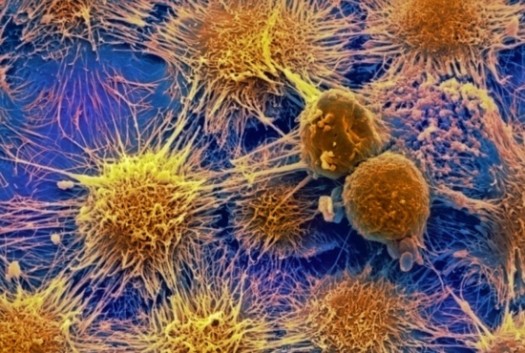
Illustration of a cancer cell. (Science Photo Library/Canva Pro)

In a world where cancer remains one of the most formidable adversaries of public health, a groundbreaking exploration by historian Robert N. Proctor sheds light on the often-overlooked forces shaping our understanding of this devastating disease. “Cancer Wars: How Politics Shapes What We Know and Don’t Know About Cancer” delves into the intricate interplay of politics, science and society, revealing how these elements collectively influence our knowledge – and ignorance – about cancer.

As cancer continues to claim over a thousand lives daily in the United States alone, Proctor’s work serves as a critical reminder that the battle against this disease is as much about politics as it is about medicine. Continue reading