Category Archives: In the Money

Greed does not heal – it kills.

Dickens ~ What AI Revealed About American Healthcare

Companion Article for The Business of Cancer Care: What Survival Costs in America’s Cancer Economy… and why the patient still comes last

As I was writing the column listed above, another question kept surfacing: If AI can synthesize enormous volumes of information, what kind of healthcare system would it recommend for the United States?

AI is not a person, a conscience, or a substitute for judgment. It is a tool trained on vast amounts of public and licensed material, and its usefulness depends on how it is built, what data it can access, and the assumptions embedded in its design. Even so, it can be useful for framing difficult policy questions.

So I asked a simple question: What would be the best alternative healthcare solution for the United States?  Continue reading

Billionaire Mark Cuban Asks Why Insurance Companies Pay $2,500 for an MRI When ‘a Center Down the Street’ Only Charges $350

Mark Cuban thinks America’s health care system can somehow turn the exact same MRI machine into a luxury item depending on which building a patient walks into.
The billionaire entrepreneur raised that question in a Jan. 10 post on X after responding to a physician arguing insurers are often blamed unfairly for rising health care costs.

Drug spend, including hospital drugs is only 14% of total HC costs,” the physician wrote. “Blaming insurance is convenient, but ins don’t set prices; they pay the bills providers submit. HC costs are high bc provider charges are high & rising fast. If you want to control costs, focus on providers, not insurance.” Continue reading

His Wife’s Terminal Cancer Drug Was Quoted at $13,000 Monthly. Then He Found It For $40

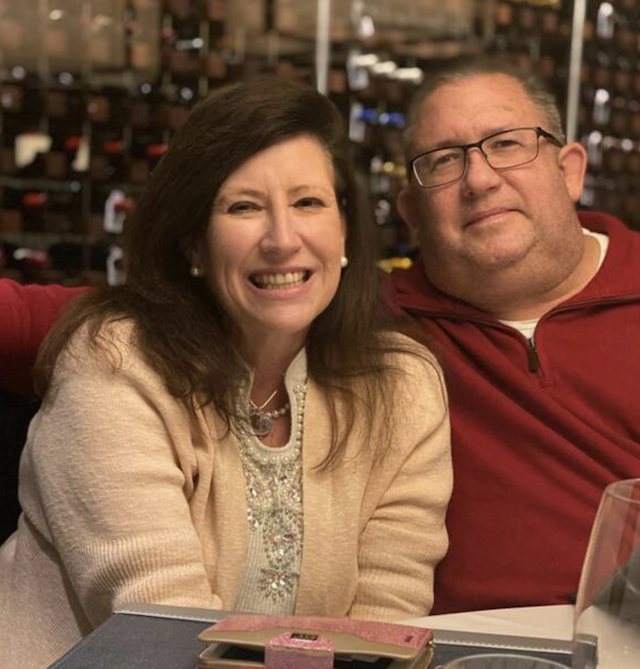
When Debbie Rhodes (pictured with husband Randy) filled her prescription for imatinib for the first time, their local pharmacist in Leawood, Kansas, shared in their relief, noting that the drug’s out-of-pocket cost ranged from $13,000 to $15,000 per month. The medication worked wonders: After starting the treatment, Debbie’s blood work showed the drug was keeping her cancer from progressing (Debbie and Randy Rhodes)

When Debbie Rhodes was diagnosed nine years ago with a terminal blood and bone marrow cancer,an unlikely hero would ultimately come to the rescue: Shark Tank star and billionaire, Mark Cuban. Continue reading

The Medicaid Money Trail Leads Somewhere You Won’t Like

I’ve been investigating federal waste and fraud for 20 years. This is the biggest scandal I’ve ever found.

COLUMBUS, Ohio — Just before the Department of Government Efficiency closed its doors, it made a quiet move that may end up as its most lasting impact on the federal deficit.

DOGE published a massive trove of data in February that, for the first time, lets the public see what companies are billing Medicaid for. For decades, the payouts have been shrouded in secrecy. One of the largest government programs was a black box.

I’ve spent the past two months diving into the numbers. What I found was the most blatant waste of federal dollars that I have encountered in my two decades as an investigative reporter.

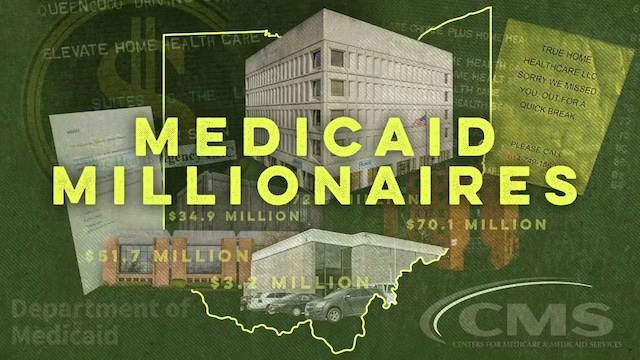
This is the first part of “Medicaid Millionaires,” a series exposing billions of dollars in dubious “personal services” payments where people are paid to spend time with their own family.  Continue reading

Medical Providers Pressured to Put Privacy Over Patient Safety

A pro-lifer says lawmakers are trying to prevent the federal government from getting specific information about things such as abortion.

Under a bill the California Legislature may soon approve, medical providers and affiliated businesses could face hefty state fines if they comply with a federal subpoena seeking information about abortion. Continue reading

Mark Cuban Calls Health Insurance ‘The Most Hated Industry‘ and Says Politicians Don’t Act to ‘Break Them Up‘ – ‘All Lip Service

Billionaire Mark Cuban says big drug and insurance companies in the U.S. have grown too powerful to care about ordinary people, but policymakers aren’t taking any real action to fix it.

Speaking at the Punchbowl News Conference in Washington, DC, earlier this month, Cuban said major insurance companies run vertically integrated empires — they control everything from pharmacy benefit managers to wellness programs. That’s why they hold so much power over the entire healthcare system. His fix? Force them to divest non-insurance businesses and level the playing field. Continue reading

How Medical Licensing Serves Big Pharma at the Expense of Public Health

We’re supposed to believe that medical licensing exists to protect healthcare consumers from “quacks” and “charlatans.” The purpose, we’re told, is to improve the quality of healthcare, yet this system has manifestly failed to produce good patient outcomes.

The simple explanation for this is that medical licensing was never designed to protect the interests of healthcare consumers. Instead, the purpose has always been to protect the financial interests of a medical trade organization allied with the pharmaceutical industry.

The effective result is a government-enforced medical cartel that masquerades as a “health care” system. Continue reading

Mark Cuban Asks Why Insurance Pays $2,500 for an MRI When a Center Down the Street Charges $350

Billionaire entrepreneur Mark Cuban isn’t letting the absurdity of America’s healthcare costs slide – not when a scan can cost more than some used cars.

On Saturday, Cuban reignited his crusade for healthcare reform by highlighting what he sees as a glaring pricing failure. “Explain to me why the insurance company will pay $2500 for an MRI when there is a center down the street that will do it for $350?” he wrote on X. Continue reading

Our Broken Healthcare Insurance System… A Physician’s Perspective From the Front Lines

The modern American health insurance system didn’t emerge because someone designed it thoughtfully, and it shows. It evolved from a series of political, economic, and cultural accidents beginning largely around the period of World War II. As with many political redistribution schemes, once underway, the system has snowballed into the unsustainable trajectory we see today.
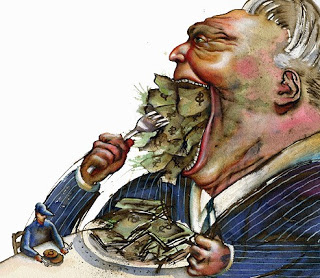
My goal in writing this article is to explain how we got here, describe the present situation from the physician’s vantage point, and outline what must change to restore sanity to American healthcare. Continue reading

Terrible Effects of Medicare Price Controls Are Here

          BIG Pharma

Medicare will impose price controls on prescription drugs for the first time when the calendar flips to January. Even before those controls formally take effect, the damage is already being done. The scheme has begun to hollow out America’s biomedical research ecosystem.

Patients will pay the price — in the form of fewer new therapies for disease, particularly cancer.

The price-control gambit was enacted as part of the Inflation Reduction Act, which a Democrat-controlled Congress passed on a party-line vote and then-President Joe Biden signed into law in August 2022. The law empowers the federal government to set the prices Medicare pays for a steadily expanding number of prescription medicines. Continue reading

FDA Upgrades Recall on More Than 33,000 Bottles of Blood Pressure Drugs Nationwide

…and since this was published… The Gubmn’t has shut down! ~ Editor

The FDA said that a generic version of metoprolol was recalled because it failed to meet the agency’s criteria. (Oh GOODY – My Heart Doctah has this stuff prescribed to me! – Editor)

The Food and Drug Administration on July 8 upgraded a recall of a generic version of blood pressure medication metoprolol to its second-highest level because it failed to meet the FDA’s own criteria.

The recall notice encompasses metoprolol succinate extended-release tablets in 25 milligram doses in 100-count and 500-count bottles. India-based Granules Pharmaceuticals Inc., the manufacturer, voluntarily recalled the medication, which is a beta-blocker used to treat high blood pressure, heart failure, and angina, or chest pain. Continue reading

Trump Announces Deal With Pfizer to Lower Drug Prices

President Trump on Tuesday announced that Pfizer had agreed to sell its products in the U.S. at “Most Favored Nation” pricing, one day after the administration required companies to respond to his prescription drug pricing executive order.
Drugmakers were given until Sept. 29 to respond to Trump’s “Most Favored Nation” Executive Order that required companies sell drugs in the U.S. at the lowest price they sell in other developed countries, establish direct-to-consumer avenues and not sell new drugs for lower prices in other countries.

“Pfizer is committing to offer all of their prescription medications to Medicaid. it will be at the most favored nation’s prices. It’s going to have a huge impact on bringing Medicaid costs down like nothing else,” Trump said in a press briefing in the Oval Office. Continue reading

What Happens When Private Equity (PE) Takes Over a Hospital

New analysis shows alarming increase in patient complications

Editor’s NOTE: The following was introduced to me from our writer, Charles R. Dickens as a part of his recent column, The Business of Medicine, which follows directly below this column. It is all well worth your efforts and time to follow through. You will begin to understand the control and manipulation of the complete Medical Ssytem in this nation today. ~ Jeffrey Bennett

Patients are more likely to fall, get new infections, or experience other forms of harm during their stay in a hospital after it is acquired by a private equity firm, according to a new study led by researchers at Harvard Medical School.

The research, published Dec. 26 in JAMA, is among a handful of recent nationwide analyses of how private equity takeovers affect the quality of patient care in hospitals. The increases are seen in conditions or outcomes deemed preventable and are key measures of hospital safety and quality.

The findings come amid growing concerns about private equity’s increasing role in U.S. health care, with $1 trillion invested in the past decade.

Continue reading