
 ~ Foreword ~
July 26, 2017 ~ What you are about to read is a history lesson, which will provide you with many answers as to the power and control of the Pharmaceutical industry. This chronological study begins back in the 1930’s and brings us to the late 20th century, and although we are now nearly eighteen years into the 21st century – nothing has changed – nothing has improved and in fact – greater numbers of people are being afflicted with dis-eases, which long ago through the teachings of William Donald Kelley, Royal Raymond Rife, Otto Warburg, John Beard, Hulda Clarke, Max Gerson, Nicholas Gonzalez and many others ~ have been proven ~ outside of the Pathological Medical Community (spelling intentional) ~ to save lives and TEACH victims how to live a longer, healthier life.
What follows deals strictly with the title-subject and was written by two brilliant (apparently British) researchers sometime in the 1990’s (we believe) and is only presented in part on this web-blog. Be be prepared for a shock – for you’ll never look at your physician nor his/her prescription again with the same trust!
I will begin this posting with the same words, which close the following post, “For the sake of your selves, your children and the animals: WAKE UP PEOPLE! Take back your power over your own health and stop supporting these barbaric and sick individuals. Only you can do this. The time to do this is NOW!“ ~ Jeffrey Bennett, Publisher
Continue reading
 It also treats heart conditions but is the latest in a string of drugs treating these conditions that’s being flagged for quality concerns.
 Bob Parant left his home on Long Island for the first time when he enrolled in college. Always interested in sports, he decided to try out for the football team in his sophomore year.
 ‘Granny’ was an old friend and contributing columnist to the family of web-sites of Kettle Moraine Publications. Was she a pharmacist or pharmacologist? Absolutely not – but she was in her 80’s and had learned from a personal standpoint about the good and bad of that which is manipulated by the likes of BIG Pharma and those who they line the pockets of – our elected Congress official-DUMB and those in the Medical field who continue to buy into all of the nonsense of the sales pitch.
 For decades, doctors believed that attention-deficit/hyperactivity disorder (ADHD) medications such as Ritalin and Adderall worked by sharpening a person’s focus.
 On December 5, 2025, the CDC’s ACIP committee voted 8-3 to end the automatic Hep B shot for every newborn. For the first time since 1991 hospitals can no longer treat every baby as if they were born to an infected mother.
 Liz Moore’s son Bodin struggled from birth: feeding and sleeping problems, followed by developmental and academic delays, social awkwardness, and finally an ADHD diagnosis at age 6.
  A recent study has identified a potential brain-based explanation for the connection between future-oriented thinking and the characteristics of attention-deficit/hyperactivity disorder, or ADHD. The research suggests that the strength of communication between specific brain networks is linked to a person’s ability to plan for the future, which in turn is associated with the severity of inattention and hyperactivity. The findings were published in Progress in Neuropsychopharmacology & Biological Psychiatry.
 President Trump correctly called out the TV networks for their fake news and said they should be broken up. He is correct. It was President Clinton who apparently was paid by the Jews to let them monopolize 90% of the American media in 6 hands.
 Texas Attorney General Ken Paxton is suing the makers of Tylenol, accusing the companies of “deceptively marketing” the drug to pregnant women despite being aware of the risks to the neurological development of unborn children.
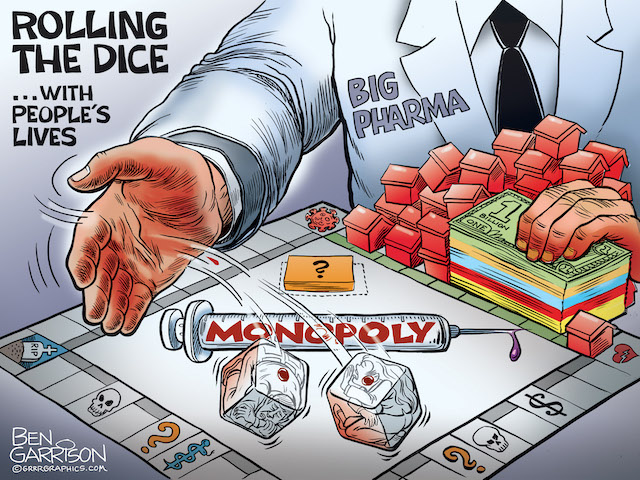 Pharmaceutical manufacturers are warning that President Trump’s September memo to crack down on misleading prescription drug advertising may be a step toward censorship. I see it differently. As someone who once fell for the powerful messaging of the alcohol industry, I am glad the president is asking whether these ads are truly serving people or subconsciously harming them.
 Between stress, allergies, injuries, chronic conditions, genetics and the general state of the world, a lot of us are walking buckets of aches and pains lately. It’s pretty easy and, to most people, seemingly harmless to turn to over-the-counter medications to relieve those daily physical indignities—but “seemingly” is the key word here.