Category Archives: PHARMACEU’TIC: A Spoonful of Sugar

Pharmaceutic
PHARMACEU’TIC

PHARMACEU’TICAL, adjective [Gr. to practice witchcraft or use medicine; poison or medicine.] Pertaining to the knowledge or art of pharmacy, or to the art of preparing medicines.

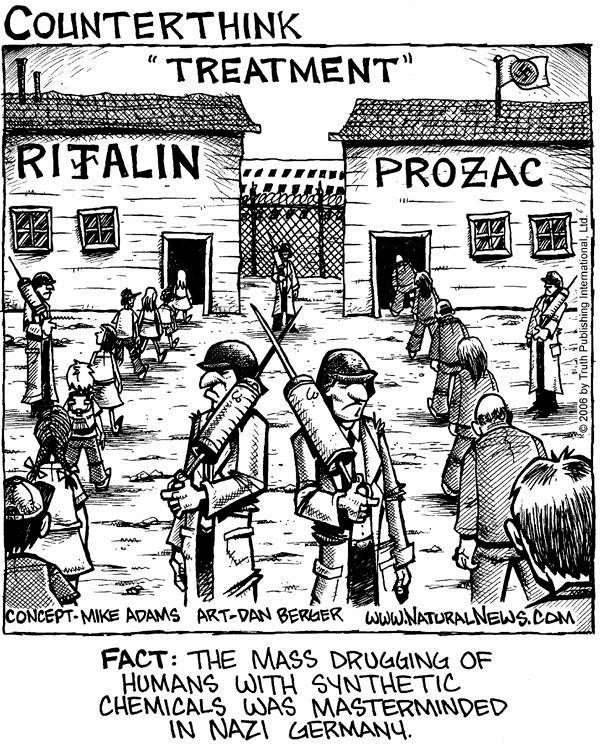
“A Spoonful of Sugar makes the medicine go down…” focuses on professionally administered and prescribed drugs and pharmaceuticals. Initially on conception this category was developed to deal with the aspect of the abuse of children, ie; Ritalin, Prozac and other legal, “Mood altering” drugs. As time went on – we chose to attack the poisons that we are ALL being fed by our medical ‘professionals.’ The overpriced products of BIG Pharma are slowly – or rapidly killing us.

The Failure of Ritalin

We’ve gone way too far with stimulants and our kids!

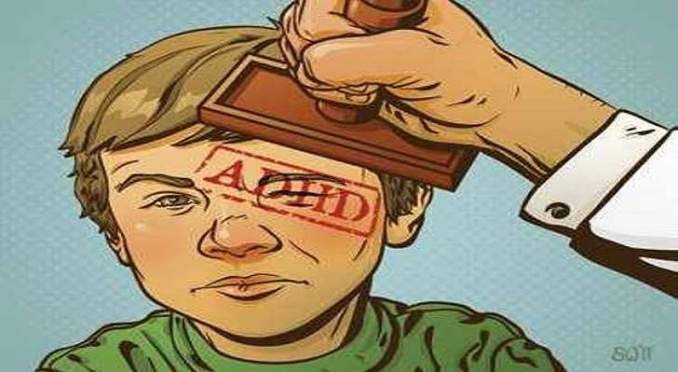
The extremism around the question of how to treat gender dysphoria has begun to erode under the pressure of science and common sense. Is it possible that the same will happen regarding ADHD?

A long New York Times Magazine piece skeptical of the ADHD consensus, by Paul Tough, published about a week ago, could be an inflection point in the debate and, one hopes, lead to a fundamental reconsideration of how we think about this overdiagnosed, overprescribed, highly ambiguous disorder.

For a couple of decades now, we’ve made fidgeting in the classroom and other typical childhood behavior, especially among boys, a medical condition that should be treated with amphetamines. Continue reading

Dickens: The Business of Medicine

Medicine and Private Equity Firms (PEFs)

…or – Making Pain Pay!

Hippocrates, for whom the Hippocratic Oath is affectionately named, covers the breadth and depth of his knowledge and teachings from his life as a healer. Scholars believe it to be a compilation of his writings and teachings, estimating that it was written in the 4th or 5th century BC. The most memorable phrase attributed to Hippocrates, “First do no harm”, as an admonition to the physicians who would follow him, is a paraphrase of ‘either help or do not harm the patient,’ and probably ‘I will abstain from all intentional wrongdoing and harm.’

It offers a comprehensive list of cautions for covering topics such as Abortion, Religious Themes, and Euthanasia. Hippocrates’ central premise is to ‘Treat the patient, not the disease’, which is a real departure from where we find ourselves today in Merka and the Business of Medicine – or as I like to think of it, “Making Pain Pay”!

The ghastly adjunct to this is Big Pharma –  the Drug Companies!

Continue reading

Medicare Drug Costs Shift Under New Law: Most Patients May Pay More

Insurers adjusting to the Inflation Reduction Act by changing fees, co-pays

New research reveals the Inflation Reduction Act’s $2,000 cap may not help most Medicare beneficiaries as insurers raise drug costs and deductibles. Image (c) ConsumerAffairs

A core promise of the Inflation Reduction Act (IRA), signed by President Biden in 2022, was to lower the cost of prescription medications for Americans, particularly older adults on Medicare. But new research suggests the reality may be more complicated — and costlier — for most beneficiaries. Continue reading

Doctors Sound Alarm as Over-the-Counter Drug Taken by Millions Is Linked To CANCER

A common medication taken by more than 100 million worldwide for urinary tract infections has been linked to cancer.

Phenazopyridine — sold under various brand names including Azo, Pyridium, Prodium, Pyridiate, Baridium, and Uricalm — is available over the counter (OTC) in the US and UK at lower strengths and by prescription at higher strengths.

It works by numbing the lining of the urinary tract, which helps to lessen the symptoms of urinary tract infections (UTIs), which include burning, irritation, and discomfort, as well as frequent and urgent urination.

But now experts are warning the drug could cause cancer based on early evidence from animal studies. Continue reading

3 Truths About Anxiety and ADHD That Will Change the Way You Think About Both

What if everything you thought you knew about anxiety – or ADHD – was missing the bigger picture? In a powerful episode of The Mel Robbins Podcast , Mel sits down with psychiatrist Dr. Tracy Marks to unpack the deep, often misunderstood connection between these two conditions. What she shared can shift not just how you understand your own mental health, but how you support the people you love. Continue reading

Death by Medicine ~ The History of the Pharma Cartel

1911, May 15
The Supreme Court of the U.S. finds John Rockefeller and his Trust guilty of corruption, illegal business practices and racketeering. As a result of this decision, the entire Rockefeller Standard Oil-Trust, the world’s largest corporation of its time, was sentenced to be dismantled. But Rockefeller was already above the Supreme Court and did not care about this decision. Continue reading

Full List of Drugs That Could Be Slashed Under Trump’s New Executive Order

President Trump touted a new executive order that would more closely align drug prices in the US with those sold in Europe and the UK, opening the door for drugs used by millions of Americans to become cheaper.

The EO does not specify which drugs will be targeted but a similar policy proposed by Trump in 2020 included drugs administered in hospitals or clinics under Medicare Part B, which covers inpatient drugs for seniors. However, that policy was blocked by a federal judge who ruled the government had overstepped its bounds by sidestepping Congress. Continue reading

Bennett: But it’s all OK – Just Take a Little Pill…

ADHD drug Ritalin affects the brain like cocaine – so why is it being prescribed to children?

I was a third week Senior at Glenbrook North High School in 1965 – and I knew that something was wrong…

As I progressed from the 5th grade on – through the 6th grade and then into Middle School at Northbrook Junior High and subsequently into High School, I found myself beginning to lack in numerous areas of my education. In English, I was an astute reader (and still am), and Science classes were interesting to me – chiefly due to the exciting talents of one teacher in Junior High – who smoked a pipe in class! History was always a subject that I thoroughly enjoyed, but as time went on, many of the teachers became boring – hence I became bored – more so in High School. Continue reading

ADHD Drugs Linked to Blood Pressure, Heart Rate Increases

Experts discuss comprehensive treatment approaches including both medication and behavioral interventions.

Rates of ADHD medication use, particularly stimulants, have been rising in the United States, especially since the COVID-19 pandemic, with prescriptions for both stimulant and non-stimulant ADHD medications surging.

The rising frequency of ADHD medication prescription has prompted a renewed focus on their safety profiles. Recent research shows that all common treatments result in slight increases in blood pressure and heart rate. However, experts caution that these effects should be considered alongside the significant benefits these medications provide. Continue reading

Drugmakers Just Hiked Prices for Over 500 Medicines

We’re the only nation that can’t control our drug prices. The reason we can’t control them is because big Pharma has bought the government, and we let it. ~ Editor

Pharmaceutical companies just raised list prices for over 500 medicines, including Novo Nordisk’s Ozempic, Gilead’s HIV-1 treatment Biktarvy and Genentech’s hemophilia A medication Hemlibra.

Drugmakers typically increase prices in the U.S. every January, according to 46brooklyn Research, a nonprofit group that analyzes drug prices. And although this month’s price hikes are comparable with those in recent years, consumers and insurance companies will likely feel the impact. Continue reading

ADHD Patients May Be Twice as Likely to Experience TDIs

Individuals with attention deficit hyperactivity disorder (ADHD) may be at twice the risk of sustaining traumatic dental injuries (TDIs). The systemic review was published in the European Review for Medical and Pharmacological Sciences.

Therefore, clinicians should be trained to raise awareness and implement preventive strategies to reduce the risk of TDIs in individuals with ADHD, the author wrote. Continue reading

Granny’s Pharmacy Pharmaceutic ~ Lessons from Granny

PHARMACEU’TIC, PHARMACEU’TICAL, adjective [Gr. to practice witchcraft or use medicine; poison or medicine.] Pertaining to the knowledge or art of pharmacy, or to the art of preparing medicines.

‘Granny’ was an old friend and contributing columnist to the family of web-sites of Kettle Moraine Publications. Was she a pharmacist or pharmacologist? Absolutely not – but she was in her 80’s and had learned from a personal standpoint about the good and bad of that which is manipulated by the likes of BIG Pharma and those who they line the pockets of – our elected Congress official-DUMB and those in the Medical field who continue to buy into all of the nonsense of the sales pitch.

Was Granny be a frequent columnist and continuing contributor – maybe – maybe not – but our purpose here today – is quite simple to understand. Remember after all – It’s YOUR Health – YOUR Choice! ~ Editor
Continue reading

Zhang: Common Medications for ADHD Linked to Increased Risk of Glaucoma

Many popular ADHD drugs activate the sympathetic nervous system. However, their downstream effects can inadvertently contribute to elevated eye pressure.

Just take a little pill…

Common drugs prescribed to treat attention-deficit/hyperactivity disorder (ADHD) are associated with an increased risk of glaucoma, a recent Canadian study found.

Glaucoma is a progressive eye disease that causes vision loss. Angle-closure glaucoma is a subtype that contraindicates with popular ADHD drugs. Continue reading

What to Do if You Can’t Afford Your Medications

After Jackie Trapp was diagnosed with multiple myeloma, an incurable blood cancer, in 2015, she thought her biggest health shock was behind her. Then came the bills for Revlimid, a powerful cancer drug that her doctor said was her best hope for controlling the disease. The first month’s supply cost $11,148; the second, $12,040 – and her insurer denied coverage. “I’d need to take the drug every month, for years,” says Trapp, 59, a former high school teacher and realtor from Muskego, Wis. “My husband and I had done well in our careers, we’d been frugal and we’d saved, but there was no way paying $120,000 a year or more was sustainable.”

Figuring out how to pay for the drug that’s keeping her alive has become an all-consuming project. Trapp fought her insurer’s denial and won, and has switched health plans twice to ensure continued coverage. To afford her annual co-pays for Revlimid – $15,000 to $21,000 a year recently, before a new law capping out-of-pocket costs for people on Medicare took effect in 2024 – she’s tapped into assistance programs from drug makers and grants from health care foundations. She has also drawn down savings, taken out two mortgages, sold her car, some furniture, and her husband’s classic truck, and lives as cheaply as possible, growing her own vegetables and DIY-ing everything from lawn care to hair cuts. Continue reading