The American Cancer Society (ACS) has updated its guidelines for colorectal cancer screening to include new blood-based and at-home stool tests.
The new blood test screens for tumor DNA, while the at-home tests look for DNA, RNA, and blood markers in stool samples.
The updated guidelines still retain ACS recommendations for starting colorectal cancer screening at age 45 and having colonoscopies done every 10 years for people who are at average risk of colorectal cancer.
The organization published its new recommendations on May 27 in CA: A Cancer Journal for Clinicians. Continue reading →
Dr. Joel Fuhrman shares his ‘G-BOMBS‘ – acronym for the superfoods that help block cancer cell growth
What if you could protect yourself from several different types of cancer with foods you already love? We often hear that food is medicine, but some superfoods are better than the rest at staving off serious illnesses such as cancer. So we turned to nutrition expert Joel Fuhrman, MD, author of countless best-selling health books including Super Immunity and Eat for Life, to find out his favorite cancer-fighting foods. Turns out he has an easy way to remember the top picks in his anticancer nutrition protocol. Read along to learn his simple acronym and discover exactly why these foods should be added to your plate. Continue reading →
Highest death risk for SCLC, pancreatic cancer, but not reflected in average funding per death
Highly lethal cancers received disproportionately less federal funding compared with other cancers that have better survival odds, according to a study by researchers at the National Cancer Institute.
An analysis of nine types of cancer showed that small-cell lung cancer (SCLC) and pancreatic cancer had the highest mortality-to-incidence ratios (MIRs) but received less funding per death during fiscal year 2025 than breast cancer and prostate cancer, which had the two lowest MIRs.
Funding per death averaged $2,818 for SCLC and $8,945 for pancreatic cancer as compared with $69,800 and $126,992 for breast and prostate cancer, respectively. Liver cancer and non-small cell lung cancer (NSCLC) had the third and fourth highest MIRs and received $10,447 and $1,754 per death, respectively. Continue reading →
Growth: Cancer cells, the pictured are kidney cancer cells magnified 1,300 times, develop through a series of trial and error mutations and clump to form tumours, which may invade and destroy surrounding tissues
A recently surfaced CIA document proves the intelligence agency reviewed Cold War–era research that hinted at potential treatments for cancer 75 years ago — and kept the remarkable report classified for decades, according to a new report.
Now, the outraged public is speaking out and alleging a cruel government cover-up. Continue reading →
There is ongoing debate about who should undergo a colonoscopy and when.
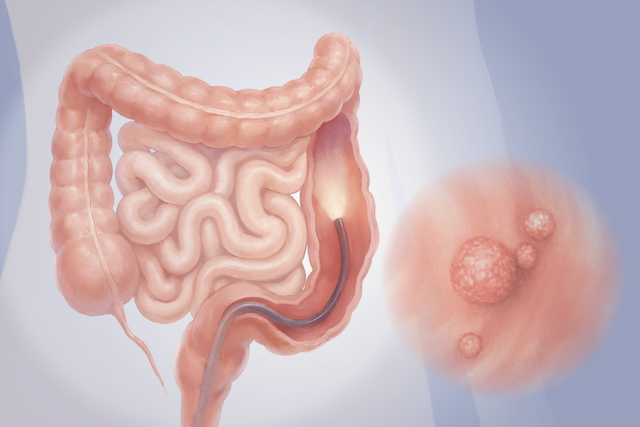
Colonoscopy is the most widely used screening test for colon cancer, which is the second leading cause of cancer-related death in the United States.
It is considered the gold standard and is more accurate than two other common screening methods—stool tests and sigmoidoscopy—because it allows doctors to see the entire colon and remove any potentially problematic polyps during the same procedure.
However, there is ongoing debate about who should undergo a colonoscopy and when. Not everyone will get colon cancer, and the procedure could lead to overdiagnosis as well as rare but serious side effects. Continue reading →
This video explores the controversial claims, the transformation of medicine in the early 20th century, and the questions that still remain unanswered today. If you’re interested in hidden history, powerful families, and the turning points that shaped the modern world, this is a story you won’t want to miss.
.
In 1913, at the height of industrial expansion, the powerful Rockefeller family began making quiet but strategic moves across the United States – moves that would forever change the future of medicine. This is the story of how they allegedly acquired influence over herbal schools across the country… and why, by 1925, many of them had disappeared without explanation.
At a time when natural remedies, plant-based healing, and traditional medicine were still widely practiced, these schools represented a completely different approach to healthcare. Communities relied on them. Generations trusted them. But as modern pharmaceutical systems began to rise, a shift started to happen. Funding changed. Regulations tightened. And slowly, these institutions began to close their doors one by one.
What really happened behind the scenes? Was it simply progress and standardization of medical education, or something more deliberate? As the influence of major industrial families grew, so did the dominance of a new medical model – one rooted in laboratories, chemicals, and large-scale production. And with that shift, older methods seemed to vanish almost overnight.
When Debbie Rhodes (pictured with husband Randy) filled her prescription for imatinib for the first time, their local pharmacist in Leawood, Kansas, shared in their relief, noting that the drug’s out-of-pocket cost ranged from $13,000 to $15,000 per month. The medication worked wonders: After starting the treatment, Debbie’s blood work showed the drug was keeping her cancer from progressing (Debbie and Randy Rhodes)
When Debbie Rhodes was diagnosed nine years ago with a terminal blood and bone marrow cancer,an unlikely hero would ultimately come to the rescue: Shark Tank star and billionaire, Mark Cuban. Continue reading →
For more than four decades, researchers at Harvard tracked the diets and health outcomes of over 130,000 nurses and health professionals across the United States. When the team, led by senior author Daniel Wang, finally analyzed the data on coffee and cognitive decline, one finding stood out: participants who drank two to three cups of coffee a day had a 35% lower risk of developing dementia compared with those who drank little or none. The results, published as a peer-reviewed study in JAMA Network Open, land at a moment when global dementia cases are projected to nearly triple by 2050, according to the World Health Organization. Continue reading →
Scientists have found the first ever conclusive link between gut microbes and the development of Parkinson’s-like movement disorders in mice. File image of Parkinson’s in the brain
I just finished reading a long, eye-opening article that reveals the real causes of Parkinson’s disease. It’s something the general public needs to see, especially anyone living with Parkinson’s or who has a loved one with the disease, so they can finally learn the truth. For decades, the medical establishment has told patients and families that Parkinson’s disease is largely “idiopathic,” meaning its cause is unknown, while pushing expensive drugs that only mask symptoms and never stop the damage. This long, meticulously researched article from Substack: What Is Parkinson’s? rips the lid off that claim. It pulls together decades of peer-reviewed studies, historical cases, and suppressed science to prove that environmental chemicals and metals have been directly linked to the exact brain damage seen in Parkinson’s. Yet the “unknown cause” label is deliberately maintained. Continue reading →
There is a persistent taboo surrounding discussing bowel movements, but it is hindering vital conversations with doctors that are essential for the early detection of serious health issues.
Bowel cancer remains one of the most common cancers across the UK, but public understanding of its symptoms and crucial screening procedures frequently lags.
One issue is that symptoms of bowel cancer can often appear similar to less severe health conditions, meaning that patients can ignore the signs until it is too late.
Mr Jeremy Clark, a consultant general surgeon specialising in colorectal diseases at Nuffield Health in Brighton, has underscored five critical warning signs the public must recognise. Continue reading →
I’ve been investigating federal waste and fraud for 20 years. This is the biggest scandal I’ve ever found.
COLUMBUS, Ohio — Just before the Department of Government Efficiency closed its doors, it made a quiet move that may end up as its most lasting impact on the federal deficit.
DOGE published a massive trove of data in February that, for the first time, lets the public see what companies are billing Medicaid for. For decades, the payouts have been shrouded in secrecy. One of the largest government programs was a black box.
I’ve spent the past two months diving into the numbers. What I found was the most blatant waste of federal dollars that I have encountered in my two decades as an investigative reporter.
This is the first part of “Medicaid Millionaires,” a series exposing billions of dollars in dubious “personal services” payments where people are paid to spend time with their own family. Continue reading →
Coffee is a daily ritual for millions of people, offering a quick boost of energy and focus to start the day. But what many don’t realize is that this beloved beverage can quietly interfere with certain medications, sometimes reducing their effectiveness or increasing side effects. Pharmacists frequently warn that timing your coffee around your prescriptions can be just as important as taking the medication itself. Whether it’s a morning pill or an afternoon dose, the interaction between coffee and medications can make a real difference in how your body responds.
Understanding these risks can help you make smarter choices without giving up your favorite cup. Continue reading →
TCM can effectively restore thyroid function through herbal medicine and acupoint therapy.
The recent rise of thyroid cancer in the United States has been dramatic. Since 1975, the incidence of thyroid cancer has nearly tripled, increasing faster than any other type of cancer.
This rise is frequently attributed in Western medicine to the widespread adoption of advanced imaging technologies, which incidentally detect many early-stage microcarcinomas, Dr. Chou Tsung-Han, chief physician of the traditional Chinese medicine (TCM) department of Ming Tang Clinics in Taiwan, told The Epoch Times.
However, from a TCM perspective, detection alone does not fully explain the increase. Individual constitutional and environmental influences play crucial roles in disease susceptibility and progression. Continue reading →

 The American Cancer Society (ACS) has updated its guidelines for colorectal cancer screening to include new blood-based and at-home stool tests.
 What if you could protect yourself from several different types of cancer with foods you already love? We often hear that food is medicine, but some superfoods are better than the rest at staving off serious illnesses such as cancer. So we turned to nutrition expert Joel Fuhrman, MD, author of countless best-selling health books including Super Immunity and Eat for Life, to find out his favorite cancer-fighting foods. Turns out he has an easy way to remember the top picks in his anticancer nutrition protocol. Read along to learn his simple acronym and discover exactly why these foods should be added to your plate.
  Highly lethal cancers received disproportionately less federal funding compared with other cancers that have better survival odds, according to a study by researchers at the National Cancer Institute.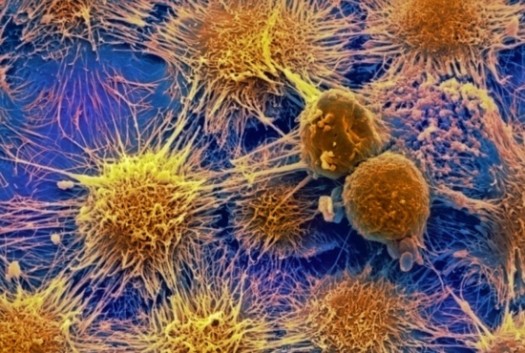
 Colonoscopy is the most widely used screening test for colon cancer, which is the second leading cause of cancer-related death in the United States.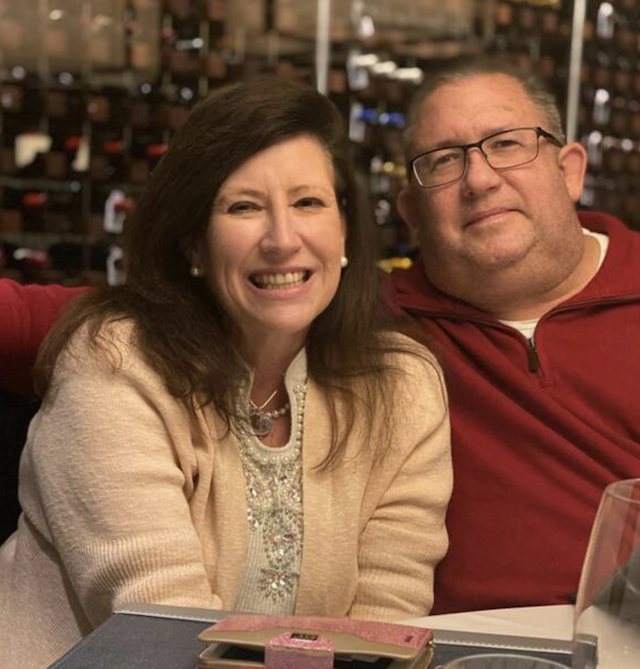
 For more than four decades, researchers at Harvard tracked the diets and health outcomes of over 130,000 nurses and health professionals across the United States. When the team, led by senior author Daniel Wang, finally analyzed the data on coffee and cognitive decline, one finding stood out: participants who drank two to three cups of coffee a day had a 35% lower risk of developing dementia compared with those who drank little or none. The results, published as a peer-reviewed study in JAMA Network Open, land at a moment when global dementia cases are projected to nearly triple by 2050, according to the World Health Organization.
 There is a persistent taboo surrounding discussing bowel movements, but it is hindering vital conversations with doctors that are essential for the early detection of serious health issues.
 COLUMBUS, Ohio
 The recent rise of thyroid cancer in the United States has been dramatic. Since 1975, the incidence of thyroid cancer has nearly tripled, increasing faster than any other type of cancer.