

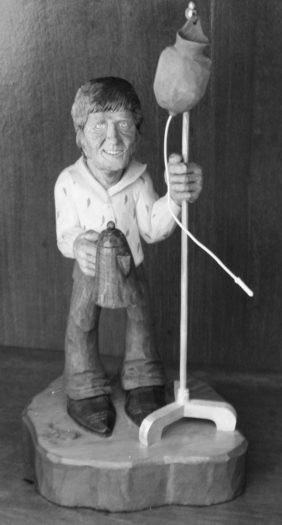
A young Dr. Gonzalez with his mentor… Dr. William D. Kelley
Dr. Linda Isaacs: Well, when I met Nick Gonzales he was investigating Dr. Kelley’s work. And so much of what I would have to say is in effect taken second hand. I mean, I met Dr. Kelley myself. But much of Nick’s work was done before I actually came on the scene, so to speak.
But on the other hand I could say that the data that Nick was collecting was part of what got me convinced that this is the direction I needed to go because it was compelling data and there was nobody else but Nick and me to follow up on this. Dr. Kelley was an orthodontist by training. And he got into cancer treatment because he himself got very, very ill with what was almost certainly pancreatic cancer.
Now this was in the early sixties so there were no CAT scans and the only way to make a biopsy was to do an operation. And so many times pancreatic cancer was diagnosed by autopsy in that day and age because there was no reason to take somebody to the operating room to prove an academic point when everyone could tell that they were sick and on their way to death. Continue reading

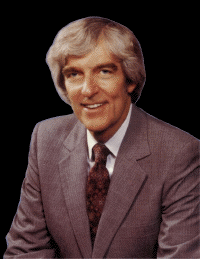 When Dr. William Donald Kelley, DDS developed pancreatic cancer in 1962, he was given less than a 4 weeks to live by the physicians of his day. Facing imminent death, Dr. Kelley chose to follow the theories of Dr. John Beard, MD in order to enjoy an improved quality of life. Dr. Beard proposed that cancer cells act similarly to trophoblastic (placental) cells—cells whose growth is stopped by endogenous pancreatic enzymes from the mother and baby. Beard’s theory is known as the “trophoblastic theory of cancer.” Employing this theory, Dr. Kelley used pancreatic enzymes, raw juices, and coffee enemas to improve his overall quality and length of life. Dr. Kelley survived until 2005.
 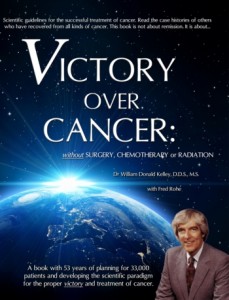 At least 86% of all cancer conditions could be adequately treated and/or prevented by diet and pancreatic enzymes.